
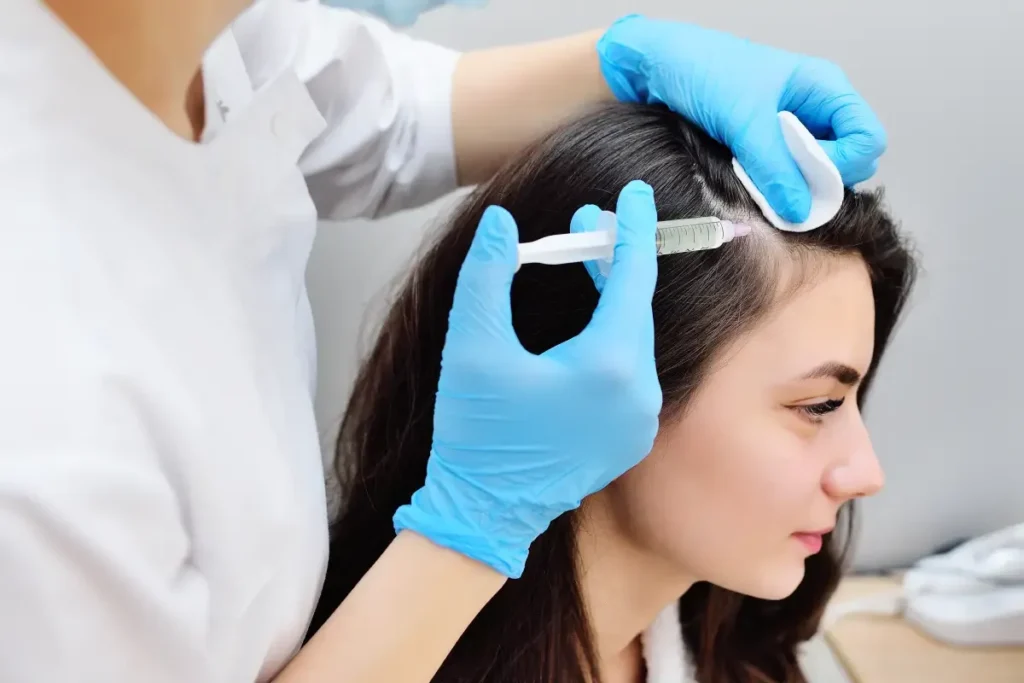
Platelet-rich plasma (PRP) therapy is a new way to fight hair loss. It uses your body’s own healing powers to make your hair thicker and fuller. PRP works by using concentrated platelets from your blood to wake up dormant hair follicles and help them grow new hair.
See prp hair results with incredible major wins. Explore amazing before and after photos and learn powerful tips for thick, healthy hair.
Studies show that people see big improvements in hair growth after trying PRP. Many notice their hair density gets better after just a few treatments. This method is safe and natural, making it a great option for those looking to stop hair loss without surgery.
Key Takeaways
PRP therapy stimulates hair growth by leveraging the body’s natural healing processes.
Clinical evidence supports the effectiveness of PRP in improving hair density and thickness.
A significant percentage of participants experience notable improvements after a few sessions.
PRP offers a non-surgical and natural solution for hair loss.
Results vary, but documented improvements offer hope for those seeking hair restoration.
Understanding PRP Hair Treatment
PRP, or platelet-rich plasma, therapy is a new way to fight hair loss. It uses the patient’s own blood platelets to help hair grow.
What is PRP Therapy for Hair Loss?
PRP therapy for hair loss is a non-surgical method. It uses platelet-rich plasma to help hair follicles grow. First, a small amount of blood is taken from the patient.
This blood is then spun to get the platelet-rich plasma. This plasma is full of growth factors that help hair grow.
The plasma is then injected into the scalp where hair is thinning. The growth factors in PRP stimulate dormant hair follicles. They also improve blood flow and make hair grow longer.
The Science Behind PRP: Growth Factors and Follicle Stimulation
PRP therapy works because it stimulates hair follicles with growth factors. These include:
Platelet-derived growth factor (PDGF)
Vascular endothelial growth factor (VEGF)
Fibroblast growth factor (FGF)
These growth factors are key to making hair follicles healthier and promoting hair growth. PRP therapy can make hair thicker and more dense.
Knowing how PRP therapy works helps people choose the right hair loss treatment. The science behind PRP shows it can be a good way to grow hair and make it thicker.
PRP Hair Results: Clinical Evidence and Expectations
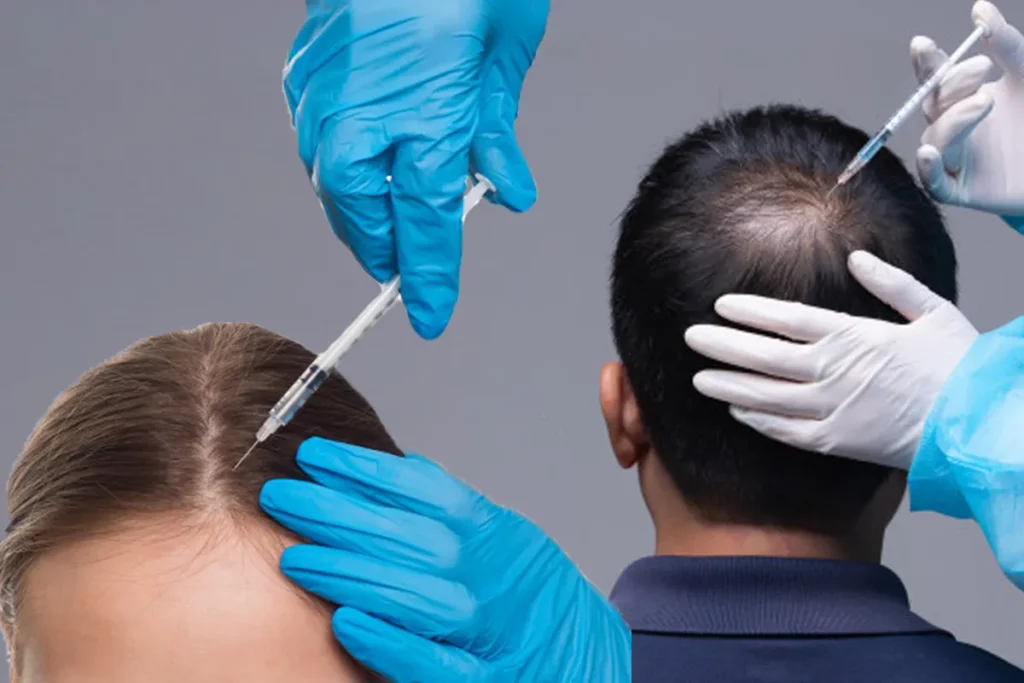
Research on PRP hair treatment is growing. Studies from 2024-2025 show it works well for hair growth and density.
2024-2025 Research Findings
Recent studies look into how PRP therapy boosts hair growth. PRP therapy uses platelet-rich plasma, full of growth factors. These factors help hair follicles grow.
A study in the latest dermatology journals found a 25% increase in hair density after six months. This is a big win, beating other hair treatments.
Timeline: What to Expect After 3 Sessions
Improvements start after the second or third PRP therapy session. Treatments are spaced four to six weeks apart. By the third session, many see less hair shedding and thicker hair.
After the first session, some see a slight improvement, but it varies.
By the second session, PRP therapy’s effects are clearer, with less shedding and new hair growth.
After the third session, results are more obvious, with better hair density and less hair loss.
Before and After: Documented Clinical Transformations
Before-and-after photos show PRP hair treatment’s real effects. These pictures prove the treatment works, showing better hair growth and density.
Clinical transformations in PRP therapy patients are clear. The results show the treatment’s power to grow hair and improve its health and look.
Conclusion: Determining if PRP Hair Treatment is Right for You
Thinking about PRP hair treatment? It’s key to look at your hair loss and health first. Seeing rp before after photos can show you what to expect.
How much hair you’ve lost, your health, and what you hope for matter a lot. Looking at hair prp before and after pictures helps you see the treatment’s good and bad sides.
Before you decide, talk to a doctor about your hair loss. They can tell you if rp hair treatment before after results match what you want. They’ll check if PRP hair injection could help you.
By weighing your choices and looking at rp before and after hair loss info, you can decide if PRP hair treatment is for you.
FAQS
What is PRP hair treatment?
PRP (Platelet-Rich Plasma) hair treatment uses your own blood platelets to stimulate hair growth.
How does PRP therapy work for hair loss?
PRP is injected into the scalp to boost hair follicle activity and improve blood supply, promoting growth.
What are the benefits of PRP hair treatment?
It can increase hair density, strengthen existing hair, and reduce hair thinning.
What can I expect from PRP hair treatment after 3 sessions?
You may notice improved hair texture, slight thickening, and reduced shedding.
How long does it take to see results from PRP hair treatment?
Visible results usually appear after 3–6 months of consistent sessions.
Is PRP hair treatment effective for female pattern hair loss?
Yes, it can help improve density and reduce thinning in women with pattern hair loss.
What are the latest research findings on PRP hair treatment?
Recent studies show PRP is safe, can stimulate hair growth, and works best with multiple sessions.
Can PRP hair treatment be used in conjunction with other hair restoration methods?
Yes, it can be combined with medications, hair transplants, or topical treatments.
Are the results of PRP hair treatment permanent?
Results are not permanent; maintenance sessions may be needed to sustain growth.
What are the possible side effects of PRP hair treatment?
Mild pain, redness, swelling, or bruising at injection sites are common temporary effects.
How do I know if PRP hair treatment is right for me?
A consultation with a hair specialist can determine if your hair loss type and health make you a good candidate.
References
https://www.google.com/url?sa=t&source=web&rct=j&opi=89978449&url=https://pmc.ncbi.nlm.nih.gov/articles/PMC4622412/





