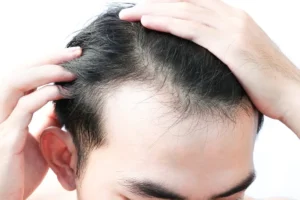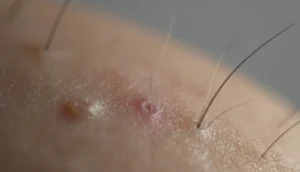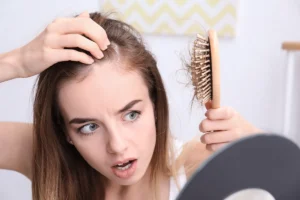
Thousands of people look for ways to stop their hair from thinning and to treat alopecia. Biotin is a hot topic in the field of dermatology. Medical Expert, a double board-certified dermatologist, says biotin is key. It helps turn carbohydrates into glucose, which gives us energy.
Biotin is a B vitamin that helps keep hair follicles healthy. Studies show that taking biotin can make hair stronger and help it grow. This is true for people who don’t have enough biotin.
Key Takeaways
Biotin is vital for hair follicle health and keratin production.
Clinical research supports the role of biotin supplementation in promoting hair growth.
A deficiency in biotin can lead to hair loss and thinning.
Biotin is part of the B complex vitamins and aids in energy production.
Consulting a dermatologist is recommended before starting biotin supplements.
Understanding Biotin and Its Role in Hair Health
Biotin is a B-complex vitamin that helps with hair growth. It’s a water-soluble vitamin that turns food into energy. This energy is key for healthy hair, skin, and nails.
What Is Biotin and How It Functions in the Body
Biotin helps break down fats, carbs, and amino acids. This vitamin is vital for a healthy nervous system. It also helps make keratin, a protein in hair, skin, and nails.
Studies show biotin deficiency can cause hair loss, skin rashes, and neurological problems. Getting enough biotin is important for health.
The Connection Between Biotin and Keratin Production
Biotin is key for making keratin, which strengthens hair. Keratin is a protein in hair, and biotin helps make it. With enough biotin, hair becomes healthier and stronger.
The link between biotin and keratin shows how important biotin is for hair. It helps hair stay elastic and reduces breakage.
Signs of Biotin Deficiency and Hair Health
A lack of biotin can cause hair loss, thinning, and brittle nails. Spotting these signs early is key to fixing the problem.
Common signs of biotin deficiency include:
Hair loss or thinning
Brittle nails
Skin rashes
Neurological symptoms like depression and fatigue
To fix biotin deficiency, eat biotin-rich foods or take supplements. Foods like eggs, nuts, and whole grains are good sources. For severe cases, supplements can help restore hair health.
The Science Behind Biotin Dose for Hair Loss
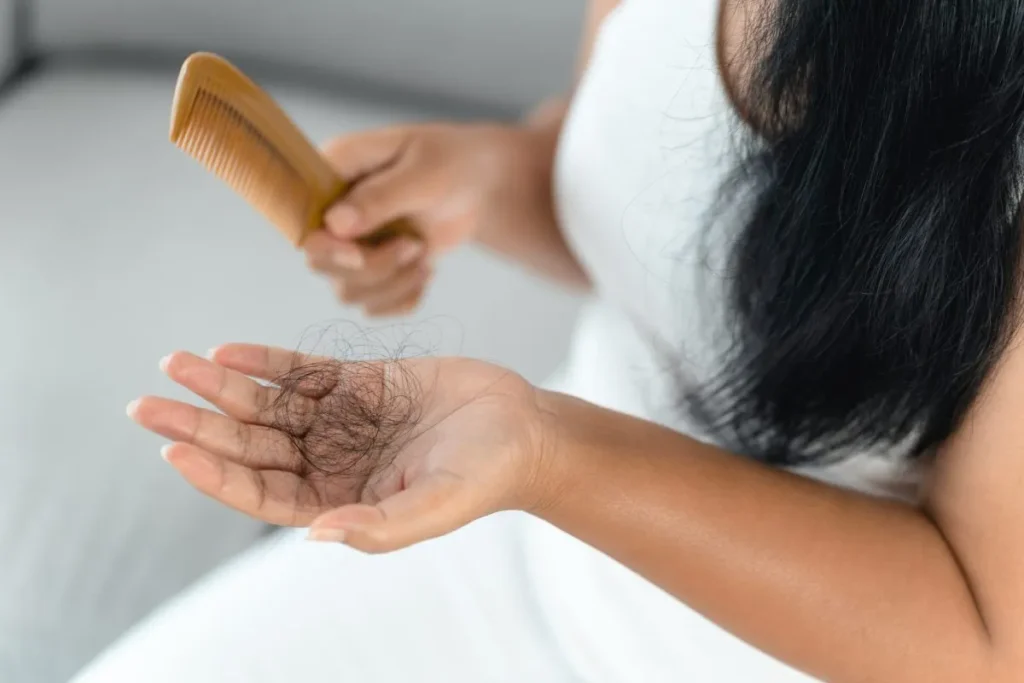
Studies on biotin and hair loss show promising results. Biotin, a B-complex vitamin, is key for hair health. It’s been studied a lot for its benefits.
Clinical Research on Biotin and Hair Growth
Research shows biotin can help hair grow. A dose of 2.5 milligrams to 5 milligrams daily improves hair quality and growth. This amount is safe and effective.
Many people take biotin for hair growth and see good results. It strengthens hair follicles, helping with hair loss.
How Biotin Strengthens Hair Follicles
Biotin makes hair follicles stronger and less likely to break. This is great for people with weak or brittle hair. It makes hair healthier and more resilient.
Biotin helps make keratin, a key hair protein. With enough biotin, keratin production is better, supporting hair follicles.
Biotin’s Effect on Hair Structure and Integrity
Biotin affects hair structure by improving keratin production. This boosts hair health and appearance. It makes hair stronger and less likely to break.
Reviews say biotin improves hair texture and reduces shedding. While results vary, many find biotin helpful for hair care.
Effective Biotin Supplementation Strategies
To get the most out of biotin, you need a solid plan. This includes knowing the right amount to take and mixing it with other nutrients. Understanding these strategies is key to growing your hair back.
Recommended Dosages for Hair Growth
Adults need about 30 micrograms of biotin every day. But supplements often have much more, up to 10,000% of what we need. Studies show that taking more biotin, like 2,500 to 5,000 micrograms a day, can help your hair grow.
Key Considerations for Dosage:
Start with a lower dose to see how your body reacts
Slowly increase the dose as needed
Talk to a doctor for advice tailored to you
Combining Biotin with Other Hair-Supporting Nutrients
Using biotin with other nutrients can boost its effects. Vitamins like C and E, and keratin, can work together with biotin to make your hair healthier.
Nutrients that Complement Biotin:
Vitamin C: Helps make collagen and improve iron use
Keratin: Makes your hair stronger
Omega-3 Fatty Acids: Keeps your scalp healthy and fights inflammation
Expected Timeline for Visible Results
How long it takes to see results from biotin varies. Most people start to notice better hair growth and less loss in 3 to 6 months.
Factors Influencing Results:
How much biotin you need
How often you take it
Your overall health and diet
Conclusion: Is Biotin Right for Your Hair Concerns?
Biotin can help with hair growth, but it works differently for everyone. If you’re losing hair or it’s thinning, know that biotin deficiency is rare in the U.S.
Studies show biotin can strengthen hair follicles and improve hair health. But, hair loss is often not caused by biotin lack. Instead, biotin might help if you have other nutritional gaps.
Think about your diet and nutrition before using biotin. Adding biotin to a diet rich in hair-supporting nutrients might boost its effects. Whether biotin works for you depends on your specific needs.
Understanding biotin’s role in hair health and addressing nutritional gaps can guide your decision. This way, you can choose biotin supplements wisely to support your hair growth.
FAQ
Does biotin really help with hair growth?
Biotin, also known as vitamin B7, is a coenzyme that plays a critical role in the production of keratin, which is the structural protein that makes up your hair, skin, and nails. While it is widely marketed as a miracle cure for thinning hair, scientific evidence suggests that it really only helps individuals who have an actual biotin deficiency. Because most people consume an adequate amount of biotin through a standard diet of eggs, meat, and nuts, supplementation often results in the body simply excreting the excess through urine without providing a noticeable boost to hair thickness or speed of growth.
How does biotin help with hair loss?
Biotin helps with hair loss by improving the infrastructure of keratin, which can strengthen the hair shaft and reduce breakage. In cases where hair loss is caused by a nutritional deficiency, increasing biotin intake can help stabilize the hair follicles and prevent premature shedding. However, it is important to understand that biotin does not typically address hair loss caused by genetic factors, such as male or female pattern baldness, because it does not block the hormones like DHT that are responsible for shrinking the follicles.
What is the recommended dosage of biotin for hair growth?
There is no official recommended dietary allowance (RDA) for biotin, but the Adequate Intake (AI) level for adults is generally considered to be 30 micrograms per day. Many over-the-counter supplements offer much higher doses, ranging from 1,000 to 10,000 micrograms, but there is very little clinical evidence to prove that these mega-doses provide superior results for hair growth. Taking excessively high amounts of biotin can also interfere with certain lab tests, such as those for thyroid function or heart health, so it is vital to discuss any high-dosage supplementation with a doctor
Can biotin help with alopecia?
Biotin can be a helpful supportive treatment for certain types of alopecia, particularly those linked to metabolic issues or nutritional gaps, but it is rarely a standalone cure for autoimmune conditions like alopecia areata. In cases of traction alopecia, which is caused by physical stress on the hair, biotin might help strengthen the remaining strands as the scalp heals. For the most common form of hair loss, androgenetic alopecia, biotin is generally considered less effective than FDA-approved medical treatments like minoxidil or finasteride which target the root hormonal causes.
How long does it take to see results from biotin supplementation?
If biotin is going to have an effect on your hair, it usually takes between three to six months of consistent supplementation to see visible results. This is because biotin affects the hair currently being formed deep within the follicle rather than the hair that has already grown out of your scalp. Since scalp hair only grows about half an inch per month, you must wait for the new, potentially stronger hair to reach a length where the improvement in quality and texture becomes noticeable to the naked eye.
Can I combine biotin with other hair-supporting nutrients?
Biotin is frequently combined with other nutrients like zinc, iron, Vitamin D, and marine proteins to create a more comprehensive approach to hair health. These combinations are often more effective than biotin alone because hair growth is a complex biological process that requires a variety of building blocks to function correctly. For example, iron is necessary for oxygenating the hair follicles, while zinc plays a role in hair tissue growth and repair, making them excellent partners for biotin in a well-rounded hair support regimen.
Is biotin effective for hair regrowth?
Biotin is more accurately described as a hair “quality” booster rather than a “regrowth” stimulant. While it can make existing hair feel thicker and appear shinier by improving the health of the hair cuticle, it cannot usually reactivate follicles that have completely stopped producing hair. For individuals experiencing significant thinning or “slick” bald spots, biotin may improve the health of the surrounding hair, but it is unlikely to regrow hair in areas where the follicles have already miniaturized due to age or genetics.
Does biotin actually work for hair growth?
The effectiveness of biotin for hair growth depends entirely on the initial state of the individual’s health and the underlying cause of their hair issues. It works exceptionally well for the small percentage of the population with a true deficiency or for those with brittle nail syndrome and thinning hair related to poor diet. For the average healthy person, however, the impact of biotin is often negligible, and the perceived benefits may sometimes be attributed to a placebo effect or other concurrent changes in diet and hair care routines.
References
National Center for Biotechnology Information. Evidence-Based Medical Insight. Retrieved from https://pmc.ncbi.nlm.nih.gov/articles/PMC12186756