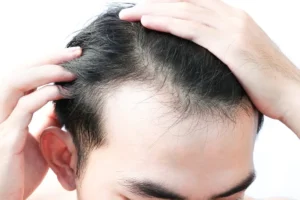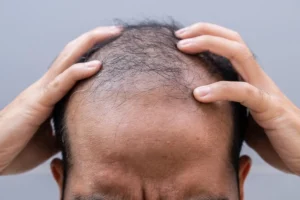
Hair loss is a big problem for millions of women around the world. It can really hurt their confidence and how they feel about themselves. By the time they are 50, about 40 percent of women will have some hair loss.
Now, there are advanced hair restoration techniques that can fix this problem for good. Modern hair transplants have improved a lot. They can treat female pattern baldness and alopecia well. Methods like FUE and FUT help make the hair look natural again.
It’s very important to pick the right method for your transplant. With the help of experts like Gold City Hair, women can get their hair and confidence back.
Key Takeaways
Hair loss affects approximately 40% of women by age 50.
Advanced techniques like FUE and FUT offer natural-looking results.
Choosing the right technique is key for a successful transplant.
Modern hair transplantation is a good way to treat female pattern baldness.
Getting help from healthcare experts is very important for a good hair transplant.
Understanding Female Hair Loss
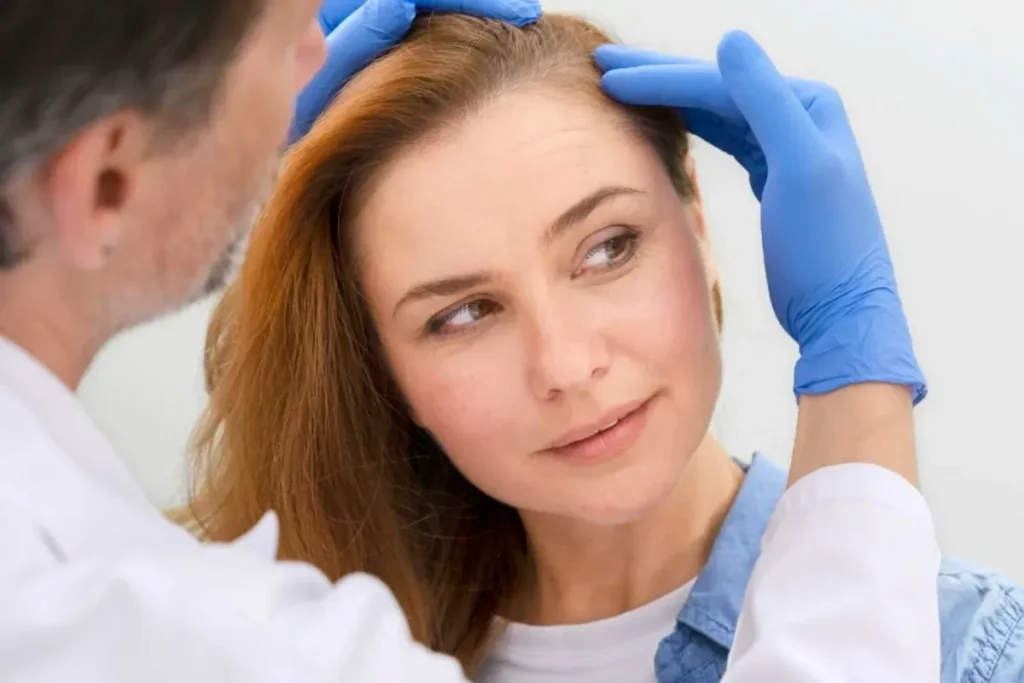
It’s important to know why women lose their hair. Hair loss can make a woman feel bad about herself. It affects how she looks and how she feels.
Causes of Hair Loss in Women
Women lose hair for many reasons. Hormonal changes, genetics, and some health issues can cause it. Hormonal imbalances, like too much androgen or too little estrogen, can make hair thinner.
Hormonal changes from pregnancy, menopause, or thyroid problems
Genetics play a big role in hair loss
Medical issues like alopecia areata, autoimmune diseases, or psoriasis
Styling hair too tightly or using too much heat can also cause loss
How Female Hair Loss Differs from Male Pattern Baldness
Men and women both lose hair, but in different ways. Male pattern baldness shows as a receding hairline or bald spots. Female hair loss is more about diffuse thinning all over the scalp.
Men have more dihydrotestosterone (DHT), a hormone made from testosterone. Women have less testosterone, so they make less DHT. This leads to different hair loss patterns in women.
Diffuse thinning instead of clear bald spots
Women tend to lose hair less than men
Often linked to hormonal changes or health issues
Knowing these differences helps doctors find better treatments for women’s hair loss.
Hair Restoration for Women: Available Techniques
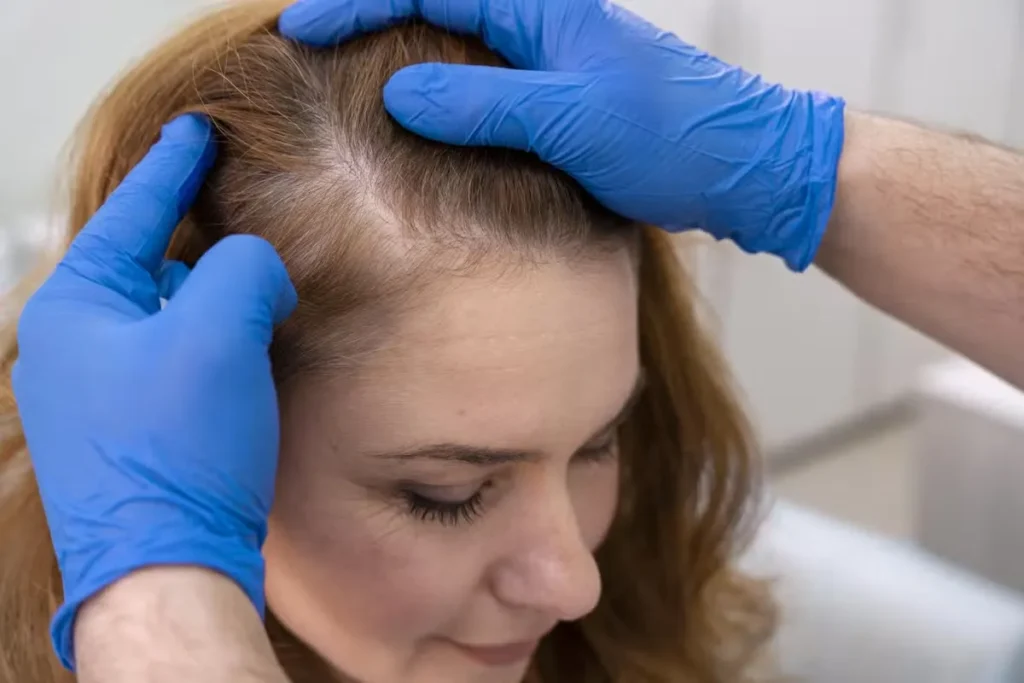
Women facing hair loss have advanced options like FUE and FUT. These methods offer natural results with little scarring and quick recovery.
Follicular Unit Extraction (FUE)
FUE is a modern way to restore hair. It takes individual follicles from the donor area with a special tool. This method is minimally invasive and leaves small, round scars that are almost invisible.
The procedure is done under local anesthesia for comfort.
FUE lets surgeons take many grafts at once.
It also allows for hair from different body parts, not just the scalp.
Follicular Unit Transplantation (FUT)
FUT, or strip harvesting, removes a small scalp strip. This strip is then cut into individual follicular units for transplant.
FUT’s benefits include:
More grafts in one session.
More coverage in one procedure.
It’s often cheaper than FUE.
Special Considerations for Women’s Hair Transplants
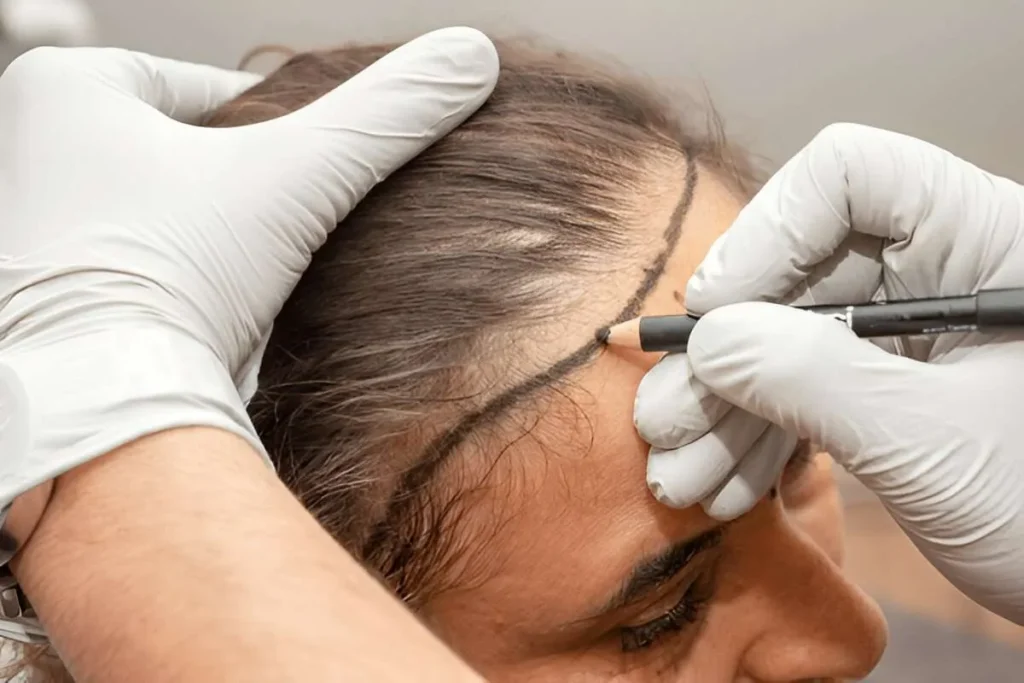
Women’s hair transplants have unique needs. Designing a natural-looking hairline is key, as it frames the face and affects appearance.
The donor hair’s density and texture must match the existing hair.
The surgeon’s skill in creating a feminine hairline is essential.
Women often need a more detailed approach due to their hair loss pattern.
Understanding these techniques and considerations helps women choose the best hair restoration option. They can pick the method that fits their needs and preferences.
The Hair Transplant Process for Women
The hair transplant process for women has several key steps. These steps are important for good results. Knowing about them helps manage expectations and makes the experience smoother.
Initial Consultation and Candidacy Assessment
The first step is a detailed consultation with a specialist. This step checks if the patient is a good candidate for the procedure. It also helps create a treatment plan that fits their needs.
In this meeting, the specialist will look at the extent of hair loss. They will also talk about the patient’s goals. Then, they will suggest the best technique, either FUE or FUT.
Preparing for Your Procedure
Before the transplant day, there are things to do. Patients are told about medications to avoid and lifestyle changes. They also get other pre-operative guidelines to ensure a safe and successful procedure.
Avoid certain medications that may thin the blood
Refrain from smoking and alcohol consumption
Follow a healthy diet to promote healing
The Transplant Day: What to Expect
On the transplant day, the donor area is shaved. This makes it easier to extract the hair. The surgical team then performs the chosen technique, either FUE or FUT.
The procedure can take several hours. It depends on how much hair is being transplanted. Patients usually go home the same day.
Recovery and Results Timeline
After the procedure, patients start the recovery phase. Knowing when to expect results is important for managing expectations.
By understanding the hair transplant process and what to expect, women can make informed decisions about their women’s hair restoration journey.
Conclusion: Making an Informed Decision
Women looking into hair restoration can find lasting, natural results with the right approach. Hair transplants offer a lasting fix for hair loss, boosting confidence and happiness.
It’s key to know the techniques like Follicular Unit Extraction (FUE) and Follicular Unit Transplantation (FUT) for women’s hair transplants. Choosing the best method helps women make smart choices for their hair.
Understanding the transplant process is vital. This includes the initial consultation, getting ready, and healing. A thorough plan is needed for successful women’s hair restoration.
By learning about the process and picking a skilled specialist, women can get great results from hair transplants. Finding the right hair restoration is a journey that needs patience, research, and the right advice.
FAQ
What is the most common cause of hair loss in women?
The most common cause is female pattern hair loss (androgenetic alopecia), a genetically influenced condition that leads to gradual thinning, especially at the crown and part line.
How does female hair loss differ from male pattern baldness?
Women usually experience diffuse thinning across the top of the scalp with a widening part, while men typically develop a receding hairline and bald spots at the crown.
What are the available techniques for hair restoration in women?
Options include medical therapy (like Minoxidil), PRP therapy, and surgical procedures such as Follicular Unit Extraction (FUE) and Follicular Unit Transplantation (FUT).
What is the difference between FUE and FUT hair transplants?
FUE extracts individual follicles one by one, leaving tiny dot scars. FUT removes a strip of scalp from the donor area and then separates it into grafts, leaving a linear scar.
How is a natural-looking hairline designed during a hair transplant for women?
Surgeons design a soft, irregular hairline that matches facial proportions, age, and existing hair density. Single-hair grafts are placed at the front for a natural transition.
What can I expect during the initial consultation for a hair transplant?
The surgeon evaluates scalp condition, donor hair density, hair loss pattern, medical history, and discusses goals, expectations, and treatment options.
How do I prepare for a hair transplant procedure?
Avoid smoking and alcohol before surgery, stop certain medications if advised, wash your hair as instructed, and follow clinic-specific pre-op guidelines.
What is the recovery process like after a hair transplant?
Mild swelling, redness, and scabbing occur for 7–10 days. Transplanted hairs shed within 2–4 weeks (shock loss), and new growth begins after a few months.
When can I expect to see results from my hair transplant?
Early growth appears around 3–4 months, with noticeable improvement by 6 months and final results typically visible at 9–12 months.
Can women with diffuse hair thinning benefit from hair transplants?
It depends. If the donor area is strong and stable, some women benefit. However, widespread thinning can limit transplant suitability.
Are hair transplants for women effective in addressing female pattern baldness?
Yes, in properly selected candidates with stable hair loss and good donor density, transplants can significantly improve density and appearance.
References
National Center for Biotechnology Information. Evidence-Based Medical Insight. Retrieved from https://pubmed.ncbi.nlm.nih.gov/37003814/