Do you have itching, flaking, or visible patches on your scalp? You might wonder if it’s eczema or psoriasis. Both can cause redness, itching, and scaling. But they are different diseases needing different treatments.
It’s important to know the differences between these two conditions. This article will explain the symptoms, causes, and treatments for scalp eczema and psoriasis. This will help you understand your condition better and make good choices for your care.
Önemli Çıkarımlar
Scalp eczema and psoriasis are two distinct inflammatory skin conditions.
Both conditions can cause itching, redness, and scaling.
Understanding the differences between the two conditions is key for effective treatment.
Scalp eczema and psoriasis have unique symptoms and causes.
Each condition needs its own treatment approach.
Understanding Scalp Eczema vs Psoriasis
It’s important to know the difference between scalp eczema and psoriasis. Both affect the scalp but need different treatments.
Yaygınlık ve İstatistikler
Scalp eczema is more common than psoriasis, affecting over 31 million Americans. This shows why it’s key to understand and treat it well.
Scalp eczema is common across many ages. Knowing its signs and how it differs from psoriasis is vital.
Age of Onset Differences
Psoriasis usually starts between 15 and 35 years old. Eczema often starts in babies and young kids. Knowing this helps in diagnosing and treating.
Spotting when these conditions start helps in choosing the right treatment.
Key Distinguishing Factors
Scalp eczema and psoriasis have different symptoms and effects. Knowing these differences helps in creating better treatment plans.
Scalp eczema has red, oily, scaly patches. Psoriasis has thick, silvery scales.
Eczema’s itching is often worse.
Psoriasis can affect life more because of its chronic nature and visible symptoms.
Understanding these differences helps manage symptoms better. It also helps in working with healthcare providers.
Visual and Physical Characteristics
Scalp eczema and psoriasis look and feel different. Both can make the scalp uncomfortable and change how it looks. But, they have unique signs that help tell them apart.
Scalp Eczema Appearance
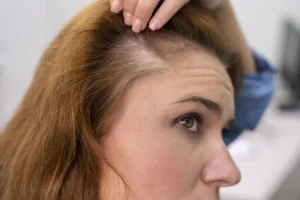
Scalp eczema shows up as dry, flaky, and itchy skin. The area might look greasy or inflamed, with a red, irritated scalp. Sometimes, the skin can get crusted or cracked, making it even more uncomfortable.
Visual examination often reveals widespread redness and inflammation. This is a key sign of scalp eczema.
Scalp Psoriasis Appearance
Scalp psoriasis has thick, defined plaques with a silvery or powder-like look. These plaques can be in specific spots or cover more of the scalp. The presence of silvery scales is a clear sign of psoriasis, unlike the widespread inflammation of eczema.
Itching Intensity and Sensation Differences
Both conditions make you itch, but the itch is different. Eczema’s itch is often more intense and can burn. Psoriasis’s itch is usually milder, feeling like tingling or stinging.
Knowing these differences helps find the right treatment. It’s key to getting relief from symptoms.
In summary, scalp eczema and psoriasis both cause discomfort but have unique signs. Recognizing these differences is important for getting the right medical care and symptom relief.
Causes, Diagnosis and Treatment Approaches
Understanding scalp eczema and psoriasis is key to managing them. Both are chronic and can’t be cured. But, knowing what triggers them and how to treat them is important.
Altta Yatan Nedenler ve Tetikleyiciler
Scalp eczema often starts with things outside the body, like allergens or stress. Psoriasis, on the other hand, is linked to internal factors like stress, infections, or genes.
Common Triggers for Scalp Eczema:
Harsh soaps or shampoos
Stres
Allergens or irritants
Common Triggers for Scalp Psoriasis:
Stres
Infections
Genetic predisposition
Diagnostic Methods
To diagnose scalp eczema and psoriasis, doctors look at the skin and medical history. Sometimes, a skin biopsy is needed to confirm the diagnosis.
Treatment Options for Scalp Eczema
For scalp eczema, avoiding triggers and using gentle shampoos is key. Doctors might also prescribe topical treatments to reduce inflammation.
Key Treatment Strategies:
Use gentle, fragrance-free shampoos
Avoid harsh soaps or irritants
Apply topical corticosteroids or immunomodulators as prescribed
Treatment Options for Scalp Psoriasis
Scalp psoriasis treatment aims to slow skin cell growth and reduce inflammation. Treatments include medicated shampoos, topical corticosteroids, and sometimes systemic medications or light therapy.
Medicated shampoos containing coal tar, salicylic acid, or zinc pyrithione
Topical corticosteroids to reduce inflammation
Systemic medications or light therapy for severe cases
Sonuç
It’s important to know the difference between scalp eczema and psoriasis. This knowledge helps in finding the right treatment. It makes symptoms better and improves life quality.
Scalp eczema and psoriasis look different. Pictures show eczema as red, oily, and scaly. Psoriasis has thick, silvery scales.
For mild cases, creams and shampoos work well. But, severe cases might need pills or light therapy. Getting a correct diagnosis is key to the right treatment.
Knowing the difference between scalp eczema and psoriasis is the first step. It helps in managing symptoms and improving health.
SSS
What does scalp eczema look like?
Scalp eczema appears as red, itchy patches with flaking, dryness, and sometimes small bumps or crusts.
How can I tell the difference between scalp eczema and psoriasis?
Eczema usually causes softer, oozing patches with intense itching, while psoriasis forms thick, silvery, well-defined scales.
What are the common triggers for scalp eczema and psoriasis?
Triggers include stress, allergies, harsh hair products, weather changes, and certain medical conditions.
How is scalp eczema diagnosed?
Diagnosis is made through a scalp examination and reviewing symptoms. Sometimes a dermatologist may perform tests to rule out other conditions.
What treatment options are available for scalp psoriasis?
Treatments include medicated shampoos, topical corticosteroids, moisturizers, and in some cases, prescription therapies to reduce inflammation and scaling.
Can I use the same shampoo for scalp eczema and psoriasis?
Some gentle, medicated shampoos work for both, but it’s best to choose products based on your specific condition and severity.
How can I manage itching caused by scalp eczema and psoriasis?
Keep the scalp moisturized, use medicated shampoos, avoid scratching, and apply soothing treatments like aloe vera or prescribed creams.
Are there any home remedies for scalp eczema and psoriasis?
Yes, applying coconut oil, aloe vera, or oatmeal treatments can help soothe irritation, but severe cases need medical care.
Can scalp eczema and psoriasis be cured?
There is no permanent cure, but both conditions can be managed effectively with treatments and proper scalp care.
Referanslar
https://pubmed.ncbi.nlm.nih.gov/25394522/