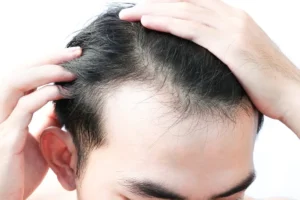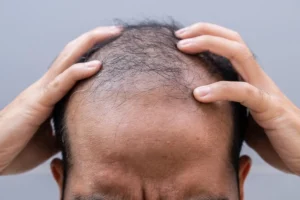
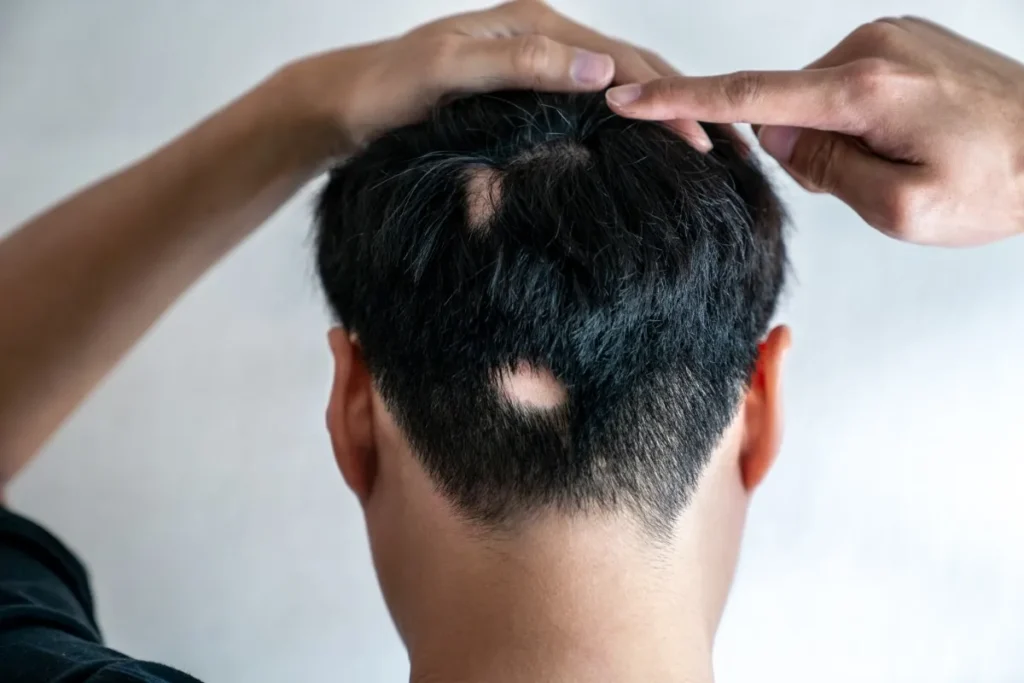
Autoimmune alopecia areata happens when the immune system attacks hair follicles by mistake. This leads to hair loss in round patches. It can get worse, causing total hair loss on the scalp, known as alopecia totalis, or hair loss all over the body, known as alopecia universalis.
This condition can start at any age. But it often shows up in kids or young adults. Studies show that over 80% of people get it before they’re 40. And 40% see symptoms by age 20.
Knowing what causes it and who’s at risk is key. It helps find better treatments and support for those affected.
Key Takeaways
Autoimmune alopecia areata affects about 2% of people over their lifetime.
The condition occurs when the immune system mistakenly attacks hair follicles.
It can develop at any age, with a significant portion developing before age 40.
Total hair loss on the scalp is known as alopecia totalis.
Complete body hair loss is referred to as alopecia universalis.
Understanding Autoimmune Alopecia Areata
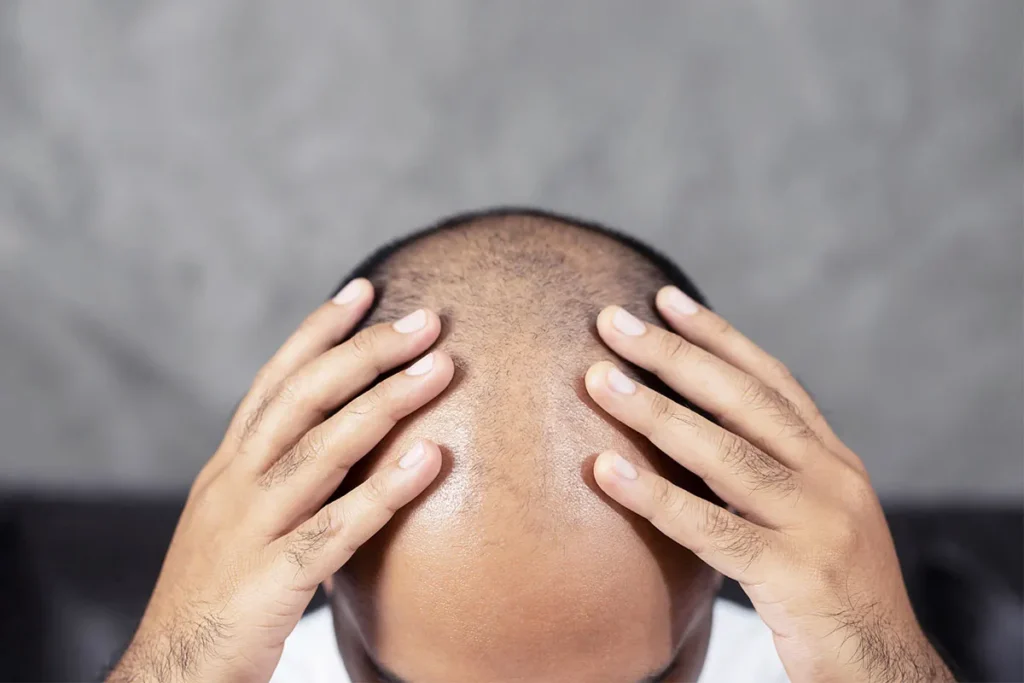
Autoimmune alopecia areata causes hair loss in unpredictable ways. It’s a complex condition where the immune system attacks hair follicles. This leads to hair loss in round patches on the scalp or other body areas.
Definition and Prevalence in the United States
Alopecia areata is an autoimmune disorder that attacks hair follicles. This results in hair loss. In the United States, about 2% of people will get it at some point, with nearly 7 million cases.
It can start at any age and often happens suddenly. Knowing about alopecia areata helps raise awareness and support those affected.
Progression to Advanced Forms
Alopecia areata can get worse, leading to alopecia totalis and alopecia universalis. Alopecia totalis means no hair on the scalp. Alopecia universalis means no hair anywhere on the body.
How fast it gets worse varies from person to person. Knowing this helps manage the condition better. Advanced forms can greatly affect a person’s life, so it’s important to offer the right support and treatments.
Understanding alopecia areata, including its definition, how common it is, and how it can get worse, helps people deal with it. Awareness and education are key in managing alopecia areata and supporting those who have it.
The Causes of Autoimmune Alopecia Areata
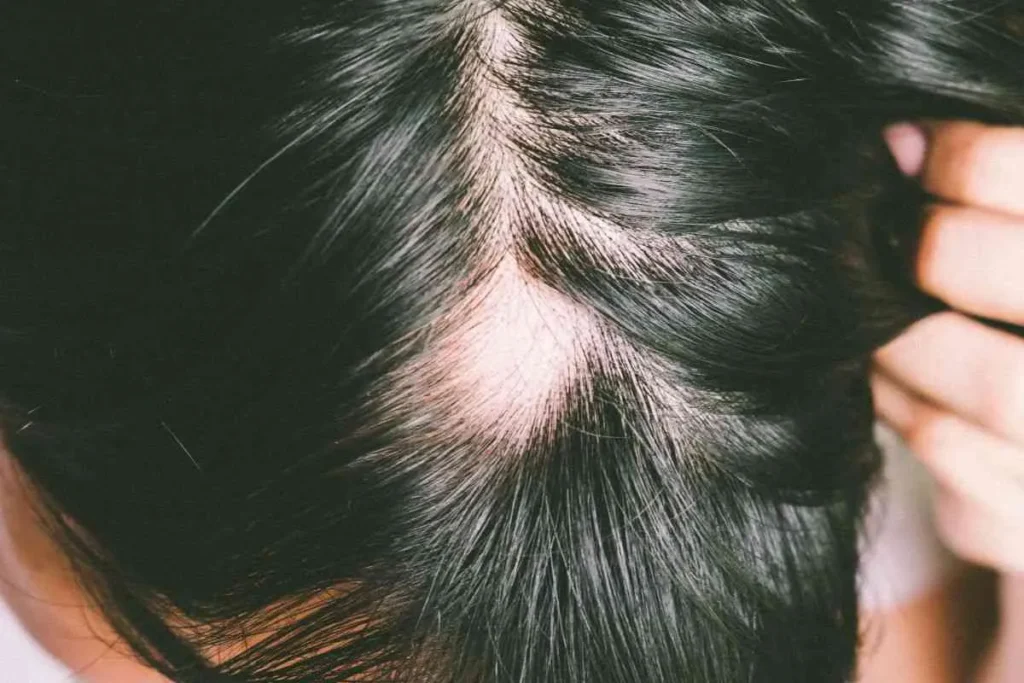
To understand autoimmune alopecia areata, we must look at the immune system and genetics. This condition happens when the body’s immune system attacks hair follicles. This leads to hair loss.
How the Immune System Attacks Hair Follicles
The immune system mistakenly sees hair follicles as foreign in autoimmune alopecia areata. This leads to hair loss. Research shows that certain immune cells, like T-cells, are key in this process.
Immune dysregulation is a major factor in this condition. The immune system fails to see hair follicles as part of the body. This failure causes an autoimmune response. This response brings inflammation and hair loss.
Genetic Predisposition Factors
Genetics play a big role in autoimmune alopecia areata. Certain genes, like HLA alleles, increase the risk. People with a family history of alopecia areata are more likely to get it.
Connected Autoimmune Conditions
People with autoimmune alopecia areata are more likely to get other autoimmune diseases. These include thyroid disease, vitiligo, and lupus. Knowing these connections is key to managing the condition well.
Having one autoimmune disease can raise the risk of getting another. For example, people with alopecia areata are more likely to have thyroid disease or vitiligo. This shows why it’s important to watch for other autoimmune conditions.
Conclusion: Age of Onset and Developing Alopecia Later in Life
Autoimmune alopecia areata can start at any age. It often shows up in kids or young adults. Knowing when alopecia starts is key for those worried about losing their hair.
Hair loss from alopecia areata can happen suddenly. It might get worse, turning into circular alopecia. Spotting signs early is important for getting medical help.
Even if alopecia starts later, knowing the risks helps manage it. Factors like family history and other autoimmune diseases play a role. Understanding these can help people deal with alopecia better.
FAQ
What is total hair loss called?
Total hair loss on the scalp is called alopecia totalis, while complete loss of all body hair is alopecia universalis.
Can you develop alopecia areata later in life?
Yes, alopecia areata can develop at any age, though it often starts in childhood or early adulthood.
Are you born with alopecia areata?
No, alopecia areata is not present at birth; it develops due to immune system dysfunction later in life.
How does alopecia start?
Alopecia often starts as small, round, smooth bald patches on the scalp or other hair-bearing areas.
Is alopecia areata an autoimmune disease that causes hair loss?
Yes, it is an autoimmune condition where the immune system mistakenly attacks hair follicles, causing hair loss.
Can you get alopecia at any age?
Yes, alopecia areata can occur in children, adults, or older individuals, with no specific age restriction.
Is there a cure for alopecia areata?
There is no permanent cure, but treatments like topical or oral immunotherapy, corticosteroids, and JAK inhibitors can help hair regrow.
What are the symptoms of alopecia areata?
Symptoms include patchy hair loss, sudden shedding, smooth bald spots, and sometimes nail changes like pitting.
When does alopecia areata typically start?
It most commonly starts in childhood or early adulthood, though onset can occur at any age.
What is the connection between alopecia areata and other autoimmune conditions?
Alopecia areata is often associated with thyroid disease, vitiligo, eczema, and other autoimmune disorders, indicating shared immune system dysregulation.
References
National Center for Biotechnology Information. Evidence-Based Medical Insight. Retrieved from https://www.ncbi.nlm.nih.gov/books/NBK537000/