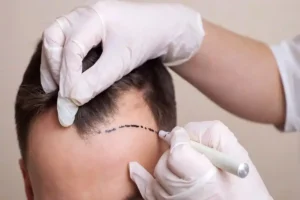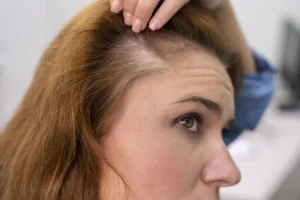
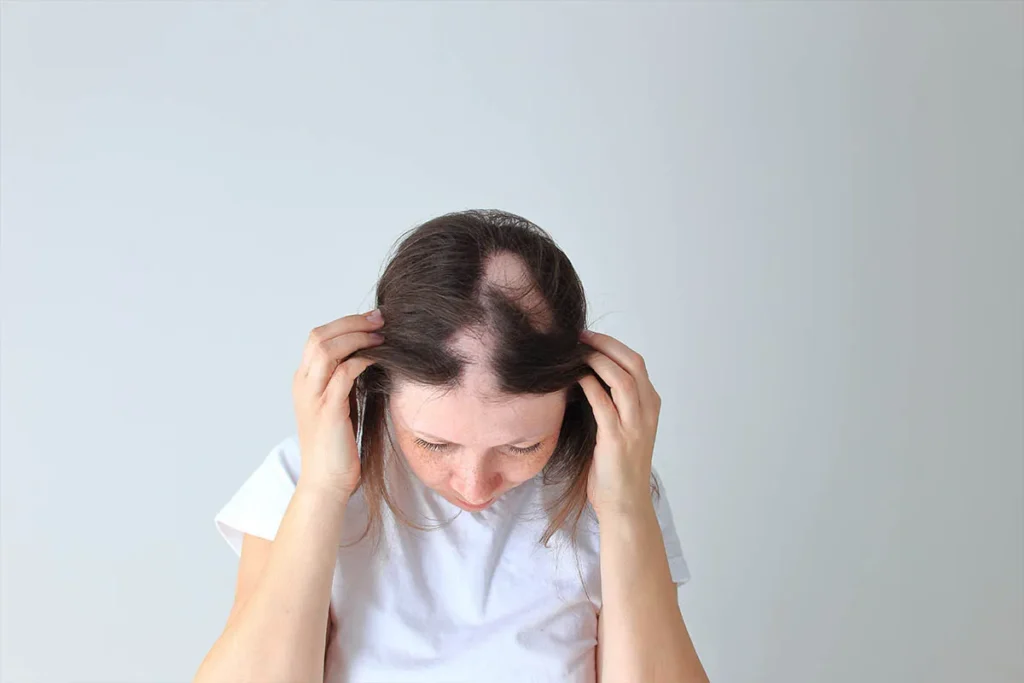
Learning about hair follicles helps us understand how healthy hair growth happens. The hair follicle is a complex organ. It produces and keeps hair strands through detailed structures.
The anatomy of the hair follicle has seven parts. These parts work together for functions like keeping the body warm, protecting, and sensing. Knowing the structure of hair and follicle shows why good hair care is key.
Önemli Çıkarımlar
Understanding hair follicle anatomy is essential for hair health and growth.
The hair follicle consists of seven distinct structural parts.
Proper hair care and restoration techniques rely on understanding hair follicle anatomy.
The dermal papilla of the hair bulb plays a critical role in hair growth.
Comprehensive knowledge of hair follicle structure supports informed decisions about hair care.
Understanding Hair Follicle Structure and Development

Hair follicles are complex structures key to hair growth and maintenance. Knowing their anatomy helps us understand hair growth and treatment effectiveness.
What Is a Hair Follicle?
A hair follicle is a small, tunnel-shaped organ in the skin that makes hair. It has parts that work together to support hair growth and health. The hair bulb is at the follicle’s base, where cells divide to form the hair shaft.
The follicle has important parts like the hair shaft, hair root, hair bulb, dermal papilla, hair matrix, inner root sheath, and outer root sheath. The dermal papilla is vital for hair growth, providing nutrients and signals. The matrix of the hair follicle is where cells divide to make the hair shaft.
The Hair Growth Cycle
The hair growth cycle has three phases: anagen, catagen, and telogen. The anagen phase is when hair grows. The catagen phase is short, and the telogen phase is when hair rests. Knowing these phases helps us understand hair growth and how to keep it healthy.
Understanding hair follicle structure and development is key to good hair care. At MCAN Health, experts check your follicles to ensure maximum results and natural density after treatments.
Hair and Hair Follicles Function in the Body
Hair follicles are key to our body’s functions, more than just looks. The pilosebaceous unit includes the hair follicle, sebaceous gland, and arrector pili muscle. Together, they help with movement, lubrication, and feeling sensations.
Hair follicles cover most of our skin, except palms, soles, and lips. Each one works alone but is affected by hormones, diet, and health. This shows how vital it is to keep our hair and scalp healthy.
Protective and Sensory Functions
Hair follicles protect and help us feel things. The hair shaft acts as a shield, and the follicle has nerve endings. These nerve endings help us sense changes around us.
The structure of a hair strand and its root is key to these roles. Knowing about the cross section of a hair follicle and the matrix hair follicle helps us see how hair growth and feeling are connected.
Thermoregulation and Other Roles
Hair follicles help with keeping our body temperature right. In humans, it’s not as big a deal as in some animals. But, the arrector pili muscle can make hairs stand up, trapping air for insulation.
The hair bulb anatomy and structures of the hair root are vital for hair growth. The anatomy of a hair strand affects its strength and health.
At MCAN Health, we use advanced methods like FUE, Sapphire FUE, and DHI. These methods protect follicles and give natural-looking results. Understanding hair follicles’ functions helps us see why keeping our hair and scalp healthy is so important. It’s about feeling confident with our hair again.
The 7 Essential Components of Hair Follicles
Hair follicles are complex structures with seven key parts. Each part has a special role in growing hair. Knowing about these parts helps us understand how hair grows and how treatments work.
1. Hair Shaft
The hair shaft is the part of hair we see. It’s made of dead cells packed tightly together. This forms the hair we see every day.
2. Hair Root
The hair root holds the hair in place. It’s at the base of the follicle. The root sheaths protect and support it.
3. Hair Bulb
The hair bulb is the base of the follicle. It’s where new hair cells grow. This is where hair starts to grow.
4. Dermal Papilla
The dermal papilla is a group of cells at the follicle’s base. It’s vital for hair growth. It gives nutrients and signals to the hair bulb.
These four parts work together to grow and keep hair healthy. The hair shaft is what we see, and the root keeps it in place. The bulb makes the hair, and the dermal papilla helps it grow.
At MCAN Health, our experts check your follicles. They figure out how each unit will do after a transplant. This ensures maximum results and natural density.
Sonuç
Learning about hair follicle anatomy is key to understanding hair growth. The 7 main parts of hair follicles work together to grow healthy hair. This is shown in a typical hair follicle anatomy diagram.
By knowing the structure of hair and follicle, you can make better choices for your hair care. This knowledge helps you pick the right treatments.
At MCAN Health, we use our deep understanding of anatomy of the hair follicle to offer top-notch hair treatments. Our team is dedicated to helping you grow stronger, healthier hair. We focus on the parts of a hair follicle and the dermal papilla of hair bulb.
Let us help you regain your confidence with our advanced hair restoration methods. We tailor our techniques to fit your unique hair needs. Our goal is to give you the hair you’ve always dreamed of.
We make sure our process is clear, pain-free, and gives you the best results. Our expert team will guide you every step of the way. We offer a personalized approach to hair care, just for you.
SSS
What is the function of a hair follicle
Hair follicles produce and anchor hair, support growth, and help regulate temperature and protect the skin
What are the main components of a hair follicle
Key parts include hair bulb, dermal papilla, matrix cells, sebaceous gland, and outer/inner root sheath
What is the role of the dermal papilla in hair growth
The dermal papilla supplies blood, oxygen, and nutrients and controls hair growth signals
What is the hair growth cycle
The cycle has three phases: anagen (growth), catagen (transition), telogen (rest/shedding)
How do hair and hair follicles function in the body
They help with protection, temperature regulation, sensation, and appearance
What is the importance of understanding hair follicle anatomy
It helps in diagnosing hair loss, choosing treatments, and performing procedures like transplants effectively
What techniques are used to protect follicle integrity during hair transplantation
Methods include careful extraction, minimal handling, proper hydration, and precise implantation techniques
How do specialists assess the condition of hair follicles
They use scalp examination, dermoscopy (trichoscopy), medical history, and sometimes lab tests or biopsy
Referanslar
https://www.lorealprofessionnel.com/hair-mag-repair-dry-hair